Boom Barriers (Vehicle Access Control)
Quick answer
Parkomate Boom Barriers provide controlled vehicle access with fast, reliable and automated entry and exit management.
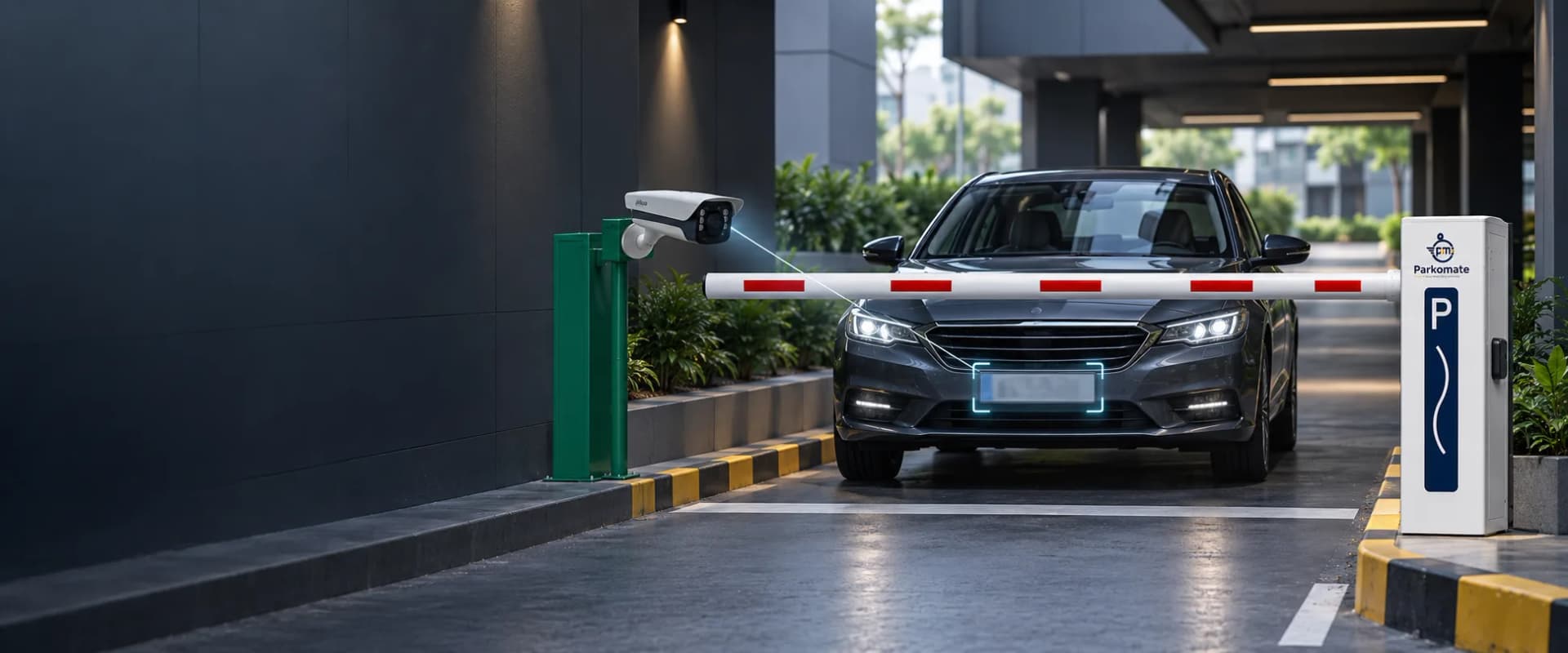
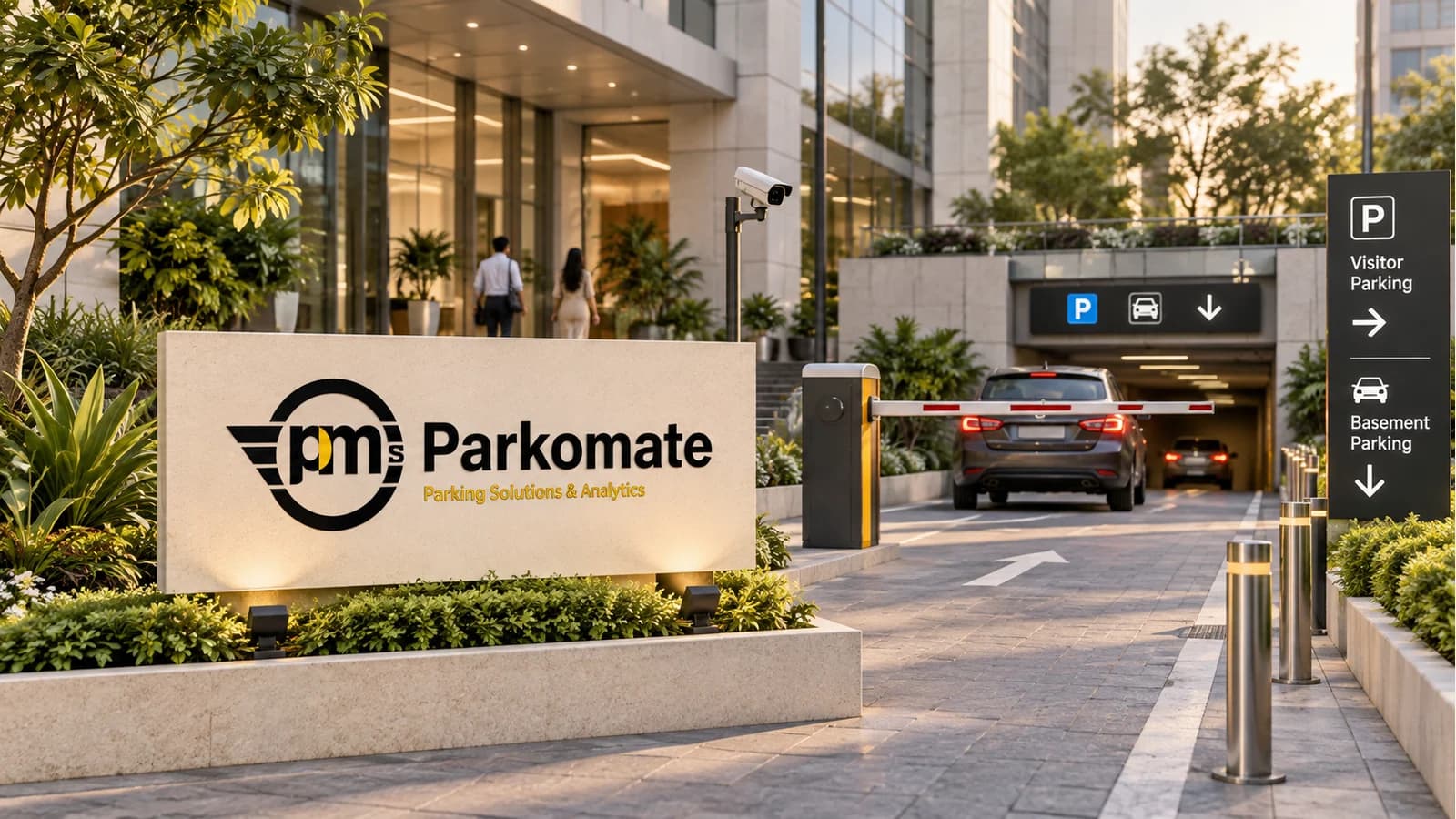
Parkomate Boom Barriers are vehicle access control barriers for commercial buildings, malls, townships, hospitals, airports and public parking facilities. They control entry and exit lanes manually or automatically, and can integrate with ANPR, RFID/UHF readers, PMS and payment workflows.
Specifications
- Operating mode
- Automated or manual override
- Use cases
- Entry control, exit control, paid parking enforcement, resident/visitor access
- Credential integrations
- ANPR, RFID/UHF, QR passes, operator console where configured
- Safety
- Loop detector / infrared safety integration as per lane design
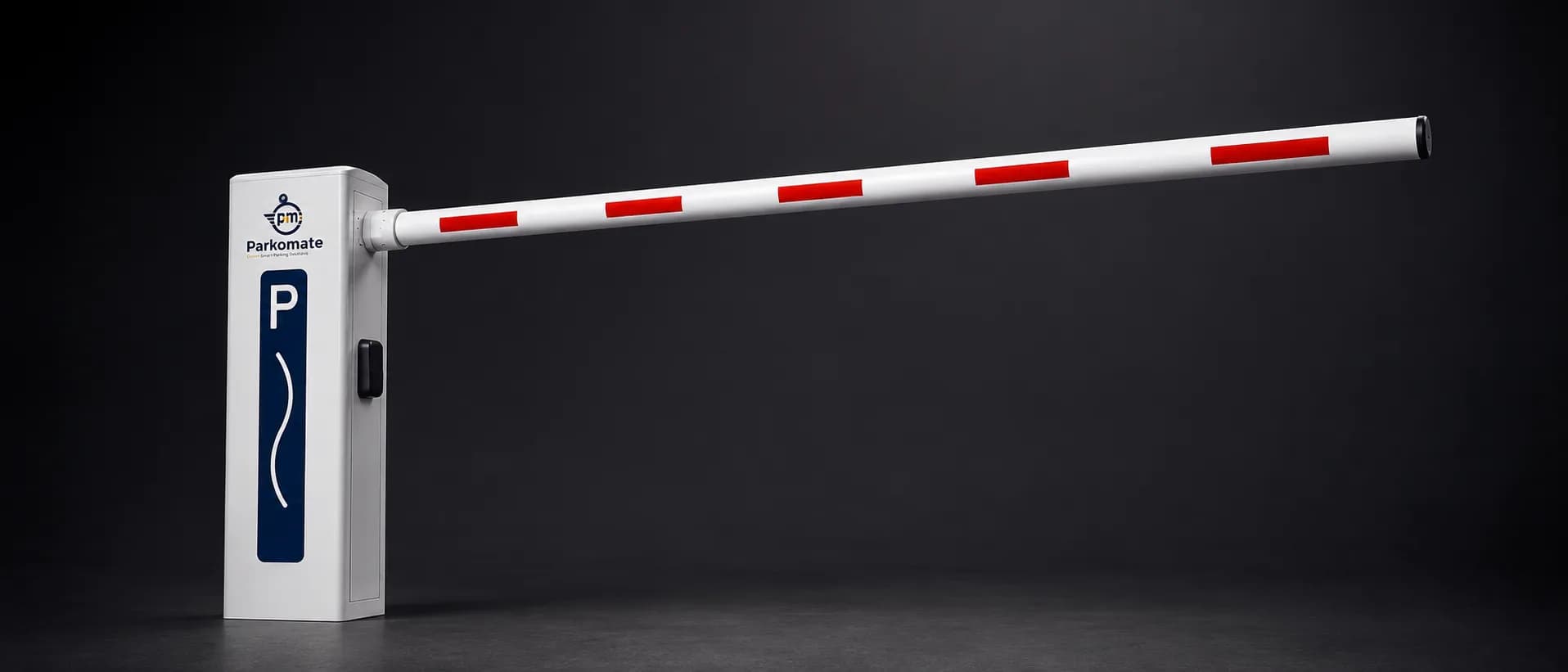
- Arm
- High-visibility reflective boom arm, length based on driveway width
- Housing
- Weather-resistant metal casing with powder coating
- Telemetry
- Open, close, forced open and fault logs where connected
How It Works
A vehicle approaches the entry or exit lane.
ANPR, RFID/UHF, QR, operator input or payment software validates the vehicle.
The controller sends an open signal to the boom barrier.
The arm lifts and the vehicle passes through the lane.
Safety loops or sensors check that the vehicle has cleared before closure.
Best suited for
Best when vehicle movement must be physically allowed, blocked or billed. Use this when:
- Entry or exit lanes need controlled access.
- The facility uses ANPR, RFID, QR passes, operator validation or payment verification.
- Revenue protection depends on preventing unpaid or unauthorized exits.
Compare with: use ANPR when the vehicle identity must be read automatically, and Smart Access Control when multiple credential types must work together. Boom barriers are the physical enforcement layer that makes the software decision visible at the gate.
Installation and civil requirements
- Civil island or mounting base at the lane.
- Power point, earthing and cable route to controller.
- Stop line, lane marking and approach geometry.
- Loop detector or safety sensor position.
- Integration test with ANPR, RFID, PMS or payment system.
Solution detail
Boom barriers, also known as boom gates, are horizontal bars or poles that pivot to control vehicular access at various entry and exit points. They are commonly used in parking lots, toll booths, industrial sites, and restricted areas to manage traffic flow and enhance security.
Problems that Clients Face
- Unauthorized Access: Without proper access control, unauthorized vehicles can enter restricted areas, posing security risks.
- Traffic Congestion: Unregulated entry and exit points can lead to traffic bottlenecks, especially during peak hours.
- Revenue Leakage: In parking facilities, lack of controlled access can result in revenue losses due to unauthorized parking or evasion of fees.
- Safety Concerns: Uncontrolled vehicle movement can increase the risk of accidents within facilities.
- Manual Monitoring Limitations: Relying solely on personnel for access control can be inefficient and prone to human error.
Solution this Product Offers
- Access Control: Function: Boom barriers restrict or allow vehicle entry based on authorization, enhancing security. Features: Integration with access control systems such as RFID readers, keypads, or remote controls to permit entry to authorized vehicles only.
- Traffic Management: Function: Regulates the flow of vehicles, preventing congestion at entry and exit points. Features: Automated operation with adjustable opening and closing speeds to accommodate varying traffic volumes.
- Revenue Protection: Function: Ensures that only paying or authorized vehicles can access parking facilities, safeguarding revenue. Features: Compatibility with ticketing systems and payment terminals to validate payments before granting access.
- Enhanced Safety: Function: Controls vehicle movement to reduce the risk of accidents within premises. Features: Incorporation of safety sensors to detect obstacles and prevent the barrier from closing on vehicles or pedestrians.
- Automation and Efficiency: Function: Reduces the need for manual intervention in monitoring and controlling vehicle access. Features: Integration with automated systems such as ANPR (Automatic Number Plate Recognition) for seamless vehicle identification and access.
Result That this Product Can Produce
- Improved Security: Unauthorized vehicles are effectively barred from entering restricted areas, enhancing overall security.
- Reduced Congestion: Efficient traffic management leads to smoother vehicle flow and minimizes bottlenecks at access points.
- Increased Revenue Assurance: Controlled access ensures that all vehicles comply with payment requirements, reducing revenue leakage.
- Enhanced Safety: Regulated vehicle movement and safety features decrease the likelihood of accidents within the facility.
- Operational Efficiency: Automation reduces reliance on manual monitoring, leading to more efficient operations and allocation of personnel.
Implementing boom barriers in parking facilities and other controlled environments provides a robust solution for managing vehicle access, enhancing security, and optimizing operational efficiency.
FAQ
Common questions
What is a boom barrier used for in parking?
A boom barrier physically controls whether a vehicle can enter or exit a parking facility.
Can a boom barrier open through ANPR?
Yes. When ANPR validates a plate, the controller can trigger the barrier.
What happens during a power failure?
A manual override can allow authorized staff to operate the barrier by hand, depending on the installed model.
Can boom barriers be used for paid parking exits?
Yes. The exit barrier can remain closed until the system confirms payment.
What civil work is needed?
Most sites need a mounting base or island, power route, control cabling and safety loop/sensor planning.