
Outdoor PGS (Geomagnetic Wireless Sensor)
Quick answer
Parkomate Outdoor Parking Guidance Systems guide drivers to available spaces using geomagnetic sensors, LED indicators, display boards and real-time occupancy information.
Parkomate Outdoor PGS is an outdoor parking guidance system for open surface lots, exposed rooftops and public parking zones. It uses waterproof geomagnetic parking sensors, LoRaWAN gateways, outdoor LED displays and cloud dashboards to show real-time outdoor space availability.
Specifications
- Detection method
- 3-axis geomagnetic vehicle detection
- Detection accuracy
- Greater than 99% as per supplied product content
- Communication
- LoRaWAN v1.0.3 Class A
- Wireless range
- Approx. 500 m to 1 km in open conditions
- Battery
- 3.6V 20Ah lithium battery, 5+ year typical lifecycle
- Enclosure
- IP68 waterproof polycarbonate housing
- Load rating
- Up to 10 ton structural load resistance
- Status update
- Approx. 16 to 20 seconds vehicle presence verification
- Maintenance
- Bluetooth calibration and OTA firmware support
How it works
A vehicle parks over a surface-mounted geomagnetic sensor.
The sensor reads magnetic field disturbance and verifies occupancy.
The sensor sends the slot status wirelessly through LoRaWAN.
A gateway forwards the data to the server and dashboard.
Outdoor LED displays update available-space counts for drivers.
Best suited for
Best for open parking areas where ceiling-mounted indoor systems are not practical, such as open-air parking lots, rooftop parking areas, campus parking zones and public surface parking. Use this when:
- The site needs slot-level parking availability.
- Wireless installation is preferred over trenching.
- Sensors must withstand rain, sunlight, dust and vehicle load.
- Outdoor display boards need real-time availability updates.
Compare with: for enclosed basements, Indoor PGS or Camera PGS is usually a better fit; for entry and exit control only, ANPR Solutions and Boom Barriers may be enough.
Installation and civil requirements
- Final outdoor bay marking and sensor placement at the center of each bay.
- LoRaWAN gateway mounting location with power and network backhaul.
- Outdoor LED display mounting foundations or poles.
- Surface condition check for asphalt or concrete anchoring.
- Drainage and cleaning plan so sensors remain visible and serviceable.
Solution components
1. Parking availability sensor:
wireless sensors with battery ranging from 3 years-5 years-10 years based on the requirement are used to detect the presence of cars on the parking spot.There sensors use geomagnetic sensors to detect the cars and have a body build to sustain heavy weight. Wireless transmission of data is done via LoraWan.
2.Parking availability counters
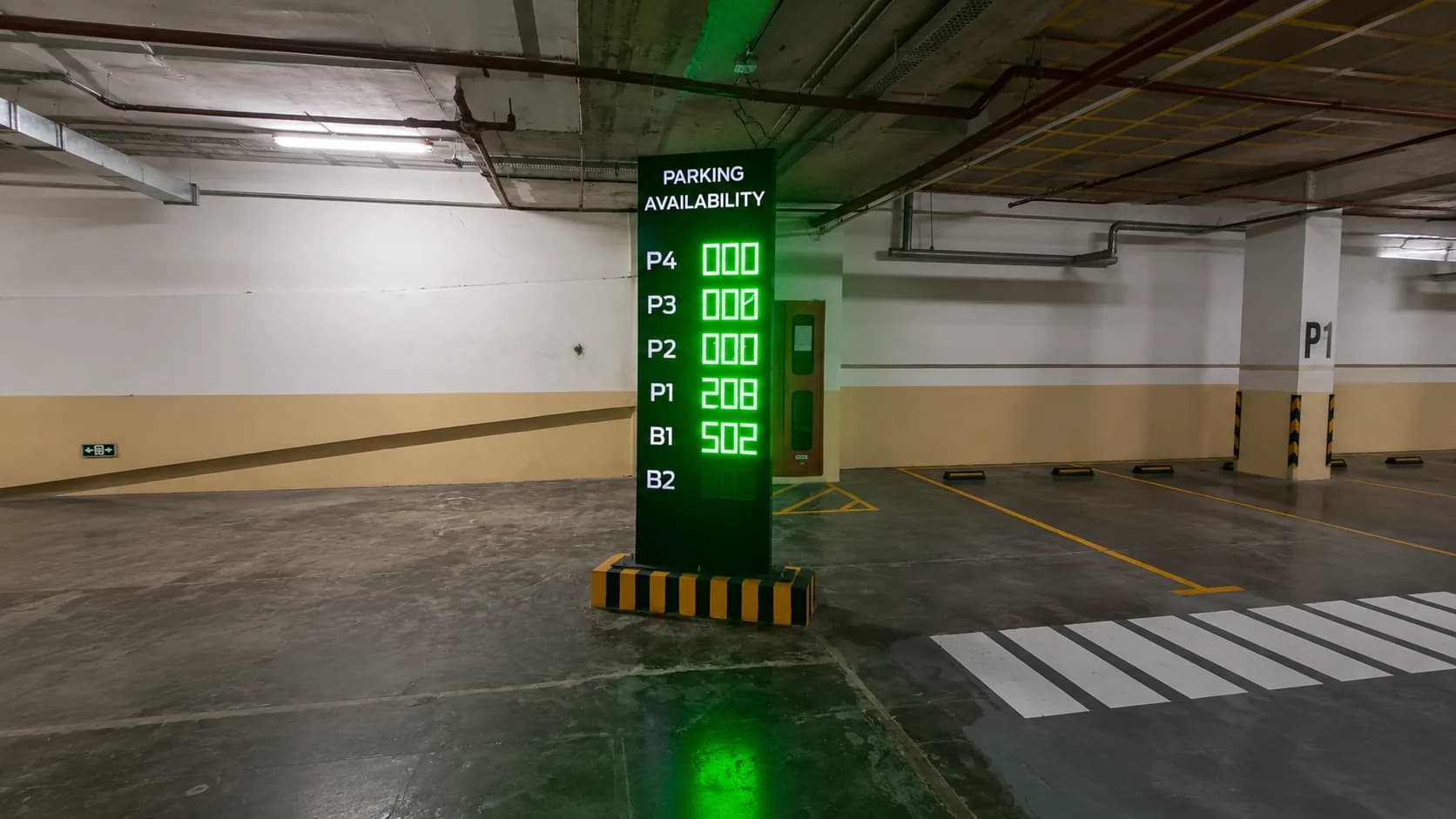
information from the sensors is made visible on counters which are placed at strategic entry points and turns allowing the drivers to make an educated decision and move towards the closest available parking space. These counters are specifically designed as per the site and to match the overall aesthetics and branding of the site.
3. Gateway device
The data from the sensors is stored and managed by the controllers. Counters showcase the information as directed by the controllers also the information is sent to the servers by the controller which is used for the web based platform for parking management.
4. Parkomates parking guidance platform
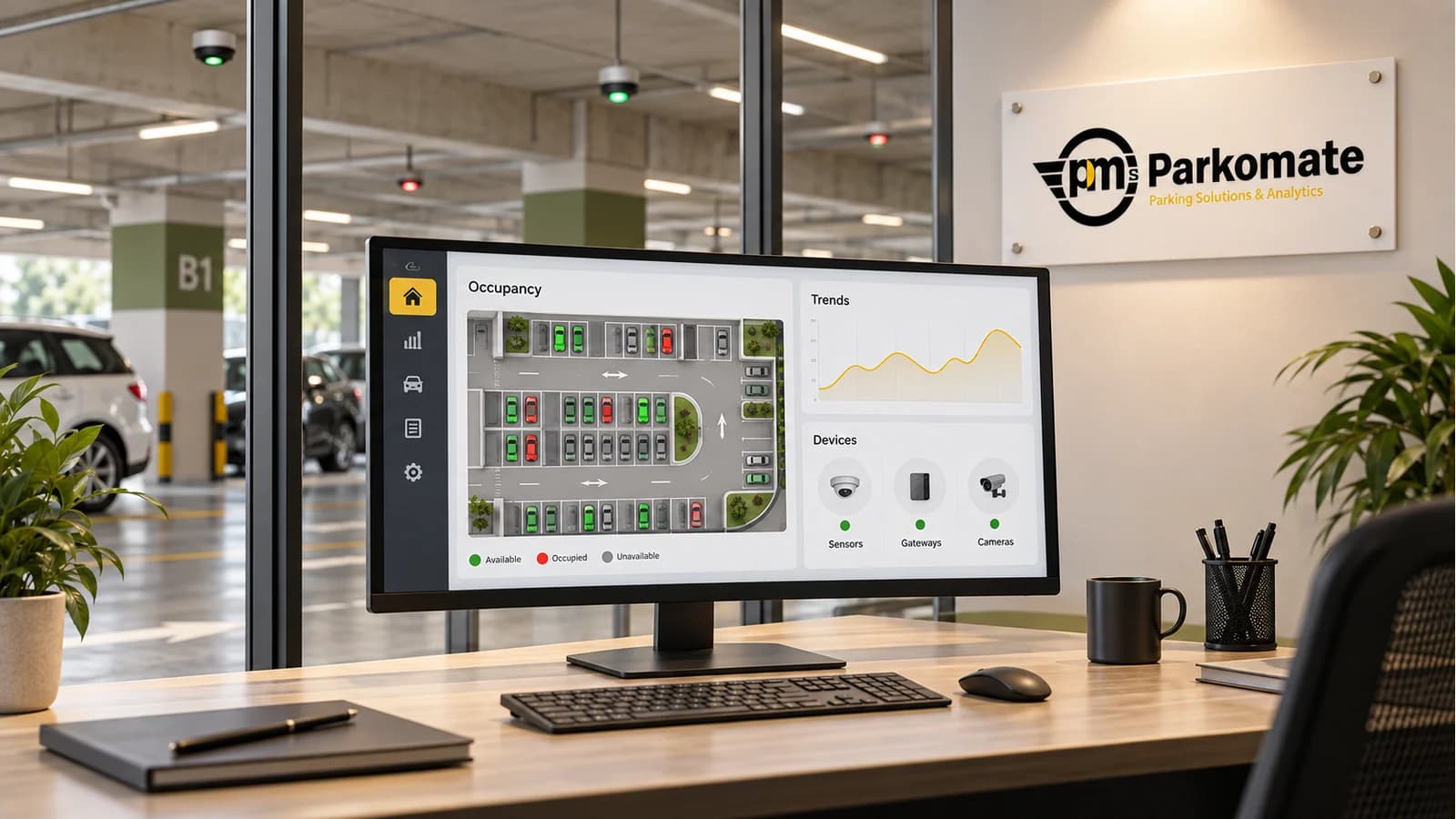
the data from the controllers is made available on the platform where the client can see the overall status of the parking occupancy, trends of parking occupancy, map view of the entire floors , legacy reports can be downloaded.
Outdoor parking sensors are advanced devices designed to enhance the management and utilization of outdoor parking facilities. By employing technologies such as magnetic field detection, micro radar, and wireless communication, these sensors provide real-time data on parking space occupancy, facilitating efficient parking guidance and improved user experience.
Problems that Clients Face
- Difficulty in locating available parking spaces in outdoor lots.
- Increased traffic congestion due to inefficient parking management.
- Limited real-time information on parking availability.
- Challenges in integrating parking data with existing management systems.
- High installation and maintenance costs of traditional parking systems.
Solution this Product Offers
- Wireless Occupancy Detection: Combines magnetic field and micro radar detection for high accuracy. Wireless sensors with long battery life (up to 5-10 years) for easy installation and maintenance.
- Flexible Installation Options: Surface-mounted or flush-mounted sensors to suit various environments. Durable designs capable of withstanding harsh weather conditions.
- Real-Time Data Transmission: Immediate communication of parking space availability to central systems. Integration with cloud-based management platforms for data analysis and reporting.
- User-Friendly Guidance Systems: Digital signage displaying available parking spaces to drivers. Mobile applications providing real-time parking information and navigation assistance.
- Seamless Integration: Compatibility with existing parking management systems and technologies. Support for advanced features like License Plate Recognition (LPR) and premium parking services.
Result That this Product Can Produce
- Enhanced efficiency in locating available parking spaces, reducing driver frustration.
- Decreased traffic congestion within parking areas, leading to smoother traffic flow.
- Improved user satisfaction due to real-time parking information and guidance.
- Optimized utilization of parking spaces, maximizing revenue for parking facility operators.
- Lower installation and maintenance costs compared to traditional wired systems.
By addressing common parking challenges with innovative solutions, outdoor parking sensors significantly improve the overall efficiency and user experience in outdoor parking facilities.
Product Brochure
Product In Focus
Indicative Images of Sensor Installation - Outdoor Parking Guidance


FAQ
Common questions
How does Outdoor PGS detect a parked vehicle?
It uses geomagnetic sensors that detect the magnetic disturbance caused by a vehicle parked over the bay.
Does Outdoor PGS need trenching?
No. The sensors are surface-mounted and communicate wirelessly, so deep cable trenching is avoided in most cases.
Can outdoor sensors handle monsoon rain?
Yes. The supplied product content specifies IP68 waterproof housing for outdoor sensors.
How long does the outdoor sensor battery last?
The supplied content specifies a 3.6V 20Ah lithium battery with a typical 5+ year lifecycle.
Where should outdoor sensors be placed?
They should be installed at the center of each parking bay, not in the driving aisle or near the wheel stop line.