
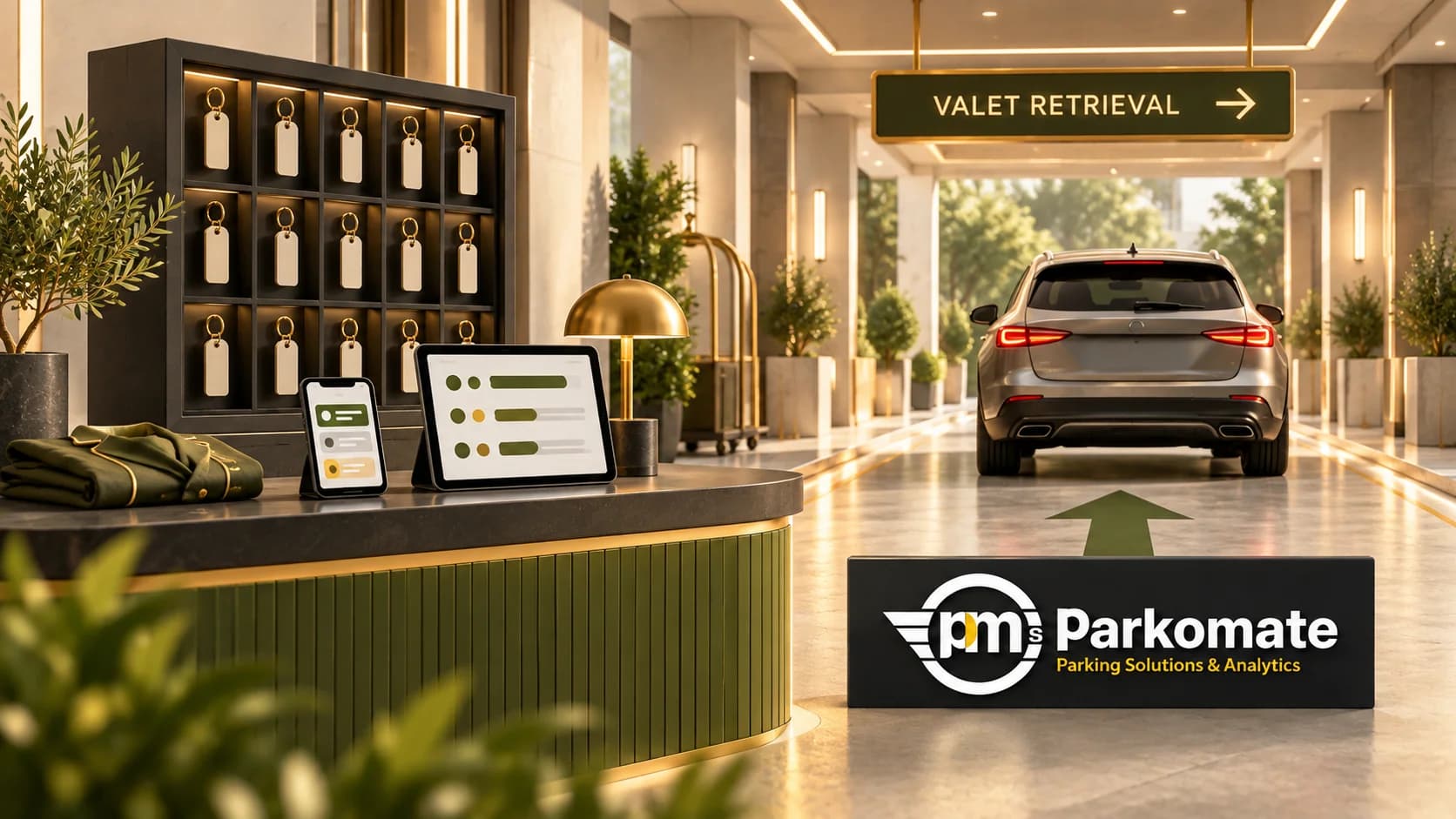
The guest is ready to leave. The car has moved since check-in, its key is back in the locker, and the attendant who parked it has finished the shift. A valet team needs one clear answer: where is everything now, and who is handling the retrieval?
A useful valet workflow connects the guest's claim reference, vehicle, parking position, key custody and responsible staff member. Digital check-in helps only when the rest of that chain stays current.
Finish the arrival handover
Create one reference for the visit and explain how the guest will request the vehicle later. Connect the vehicle to the evidence required by the property's handover policy, collecting only the customer information needed for that process.
If the property requires a condition record, agree how staff capture it and handle a disagreement. Ask for the exact workflow in the demonstration; do not assume that every valet package includes the same photography or verification steps.
Before the attendant drives away, responsibility should be assigned. A digital ticket without that handover can leave the supervisor asking the same question as a paper slip: who took the car?
Update the bay and the key separately
The vehicle's position and the key's custody location are different records. Moving the car to a staging area should not leave the old bay as the retrieval destination. Returning a key to the locker should not imply that the car has been returned to the guest.
Test a bay change after check-in, then a shift change with vehicles still parked. The incoming supervisor should be able to identify outstanding visits, current tasks and unresolved exceptions without relying on someone who has gone home.
Review the physical route too. HSE's workplace-transport guidance recommends separating vehicles and pedestrians where possible and reducing reversing. These are useful UK guidance principles for a site risk review, not a statement of Indian legal requirements.
Make retrieval states mean something
Request received, assigned, being retrieved, ready and handed over describe different actions. Agree the wording with the team and check what causes each change.
A guest who has requested a car should not be told it is ready merely because the request arrived. If the car reaches the porch first, staff need an approved waiting position. If the guest presses the request button twice, the team needs one understandable task rather than two attendants looking for the same vehicle.
Include a cancelled request and an obstructed parking position in the demo. These tests show how the supervisor stays informed when the normal sequence pauses.
Close the visit at the actual return
Use the property's approved claim and identity checks before releasing a vehicle. Define how a lost reference or a different collecting person is escalated. A plate number visible in the car park should not, by itself, establish entitlement to collect the vehicle.
Record the completed handover. Closing the task when the car reaches the porch can make the screen look finished while the vehicle is still waiting. At shift close, review outstanding visits and unresolved releases together.
Measure the wait in useful parts
Separate request-to-assignment, assignment-to-ready and ready-to-handover. An illustrative long wait may come from a busy team, a distant bay or a guest who has not reached collection. Each needs a different response.
Review unresolved visits and custody exceptions alongside timing. A shorter recorded retrieval time is not useful if staff achieve it by closing tasks too early.
Parkomate's Valet Parking Software describes staging-bay and key-locker references, staff logs, live retrieval tasks and app-free QR or mobile-web requests. ANPR Solutions and Parking Management System can be discussed where vehicle capture or regular parking billing forms part of the proposed scope. Confirm those integrations for your property.
Does a QR request replace the final claim check? It is a request channel. Vehicle release still follows the approved handover procedure.
What if connectivity is unavailable? Agree a fallback custody record and a reconciliation process, then rehearse it with the supplier and staff.
For a Hotels and Hospitality demo discussion, bring one arrival, one shift change and one busy departure sequence. They give the team something concrete to test.